
In April, the The Daily Monitor Newspaper ran a poignant piece titled “The Death of Mother Tongues in Ugandan Schools.” It revealed a troubling truth: Uganda’s indigenous languages are vanishing from classrooms, casualties of globalization and the unchecked dominance of English. Yet even as these roots are forgotten at home, they are being fiercely protected abroad.
Every year, May 1st – Labor Day in Uganda – unofficially kicks off what has become known as the Ugandan Diaspora Cultural Convention Season. From May to early September, Ugandans in North America organize dozens of conventions celebrating regional identities, languages, and traditions. This season typically concludes with the annual UNAA Convention on U.S. Labor Day weekend, the largest gathering of Ugandans outside the country.
But UNAA is just one piece. Across North America, smaller but equally meaningful gatherings—organized by ethnic, cultural, and faith-based communities—serve as spaces to preserve and pass down identity. These aren’t just reunions. They are classrooms, stages, and sacred grounds for people determined not to forget.
Take Buganda Day, hosted annually in Washington, D.C. by Gwanga Mujje, a chapter of the Buganda Bumu North American Conventions. In partnership with Luganda Academy, the event offers language classes, youth competitions, and cultural showcases that attract not only Baganda, but Ugandans of other ethnicities and even curious non-Ugandans.
Where the homeland forgets, the diaspora remembers. As Ugandans journey farther from their ancestral homes, a paradox emerges: the more distant they grow geographically, the deeper their yearning for home becomes. Identity abroad becomes more than descriptive—it becomes restorative, a compass pointing home.
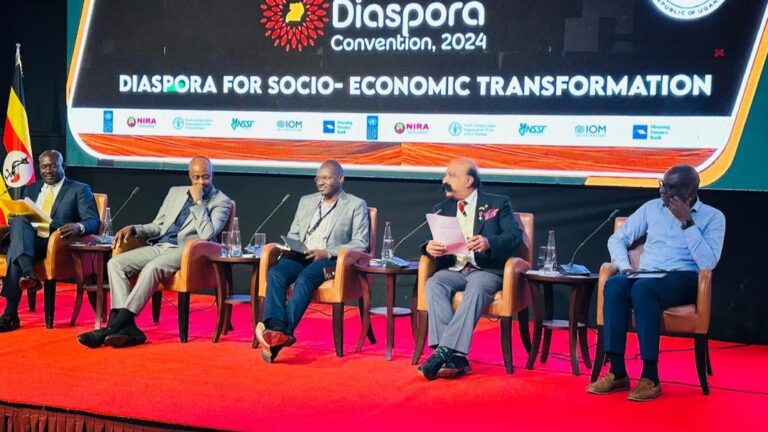
This point was driven home to me in December at the inaugural Ministry of Foreign Affairs diaspora convention in Kampala. The Permanent Secretary, Mr. Vincent Waiswa Bagiire, candidly shared that although he’s invited annually to attend the Basoga Twegaite convention in the U.S., he has never accepted—because, in his view, outside Uganda, he is Ugandan first, not a Musoga.
PACEID Uganda Chairman Mr. Odrek Rwabwogo echoed this, calling for a shift away from what he termed “little groupings” in the diaspora and advocating instead for a pan-African or Great Lakes identity.
While well-intentioned, such views underestimate the strategic value of cultural heritage. They suggest that ethnic pride is inherently divisive. But this is false. The foundation of Uganda’s nationhood is a federation of cultures—each one recognized, supported, and celebrated by the state. The central government finances traditional institutions. The President regularly attends coronations and cultural days.
Our diversity at home is institutionalized. Why, then, should diaspora expressions of culture be seen differently?
In truth, these diaspora associations are not distractions from national identity—they are reinforcements of it. They fill the void of the extended family. They recreate the village square abroad.
And they teach what the homeland increasingly does not: native language, folklore, and cultural pride.
According to a 2016 UNESCO report, children learn best when taught in their mother tongues during early education. Uganda officially endorses this, yet English continues to dominate. The result is a generation fluent in global languages but estranged from their own.
Rather than shame diaspora Ugandans for holding onto their roots, we should celebrate them. In Dallas, Texas, I watched Acholi and Bagisu dancers perform on the same stage during a UNAA convention, captivating a mixed audience before joining together to sing the national anthem. That is what unity in diversity looks like.
Unity is not uniformity. It is the harmony of differences.
During my time as UNAA President and CEO, and after, I attended numerous conventions—Lango Association of North America (LAONA), North American Masaba Cultural Association (NAMCA), International Community of Banyakigezi (ICOB), Tooro American Association (TAA), Banyankole Kweterana International (BKI), Bunyoro Kitara North American Association (BKNAA), and more. These were not just social events; they were crucibles of leadership. In fact, the founders and presidents of many of these groups also served in UNAA Council leadership roles. They are not rivals to national cohesion—they are its proof.
Rwabwogo himself spoke of the strength he draws from knowing four generations of his ancestry, his native language, and his cultural dance. That is exactly the point: cultural grounding gives people confidence to reach out and connect.
You cannot build regional unity on erased identities.
If a Ugandan politician can leverage ethnic identity to win votes, or if the tourism board can promote cultural dances, then diaspora Ugandans should not be scolded for organizing by region or language. It is the same cultural pride, expressed from afar.
The Ugandan flag flying alongside clan or kingdom banners at diaspora events is not a sign of division. It is a declaration of loyalty—one Uganda, many cultures.
These cultural associations have infrastructure, leadership, and trust. They are ready-made partners for national development. With proper engagement—through matching grants, policy inclusion, and public support—they could become a formidable asset.
It is time to stop viewing diaspora culture through a lens of suspicion. These groups are not relics of the past; they are architects of a future Uganda that values its people wherever they are.
Empathy begins at home—and culture is home.
So let us uplift, not undermine, those working tirelessly to preserve our identity abroad. In doing so, we honor not just where we come from, but who we truly are.
As the saying goes, “You can’t know where you’re going if you don’t know where you come from.”
Uganda’s diaspora cultural associations are a source of strength. Let us treat them as such.