
The Ugandan diaspora is one of the country’s most valuable, but underutilized resources that could play a transformative role in the country’s development. In 2023 alone, Uganda’s diaspora sent home $1.4 billion (UGX 5 trillion) in remittances, equaling about 3% of the nation’s GDP — matching Uganda’s tourism earnings and surpassing coffee, which generated $1.14 billion — a 30 year high.
Yet, a lack of strategic engagement means that the diaspora’s contributions remain largely unstructured.
Beyond remittances, Ugandans abroad are increasingly investing in business and real estate, signaling a shift towards entrepreneurial ventures. Despite this, they still are not able to enjoy the most basic of a citizen’s right — the right to vote.
In June 2020, in the case of Kalali Steven v Attorney General and the Electoral Commission – Uganda (EC), the Uganda High Court held that Ugandans in the diaspora have a right to vote and that the EC should put in place arrangements for them to be able to do so. The 2021 General Election was a missed opportunity for Parliament of Uganda and the Executive branches to implement the court ruling.
Diaspora engagement and the Diaspora Right to vote is a strategic imperative. The 2026 General Elections provide yet another opportunity to implement the court ruling and foster a sense of shared responsibility for Uganda’s development. Unfortunately, in August 2024, with elections scheduled less than 18 months away, the EC released the 2026 General Elections roadmap without a mechanism for Diaspora Voting, continuing to contravene both national and international human rights laws.
In a May 2013 draft National Diaspora Policy, the Ministry of Foreign Affairs, Uganda (MoFA) calls for the establishment of the National Diaspora Services Board (NDSB), as a dedicated semi-autonomous body, akin to both the Uganda Tourism Board and the Uganda Coffee Development Authority, as well as the appointment of a Minister of State for Diaspora Affairs to create a more structured approach to engaging the diaspora, ensuring that their financial and intellectual resources are maximized.
The policy also emphasized the importance of involving the diaspora in governance by granting the diaspora the right to vote and contest parliamentary seats. Despite over a decade since its development, the policy has never been approved by the Cabinet and this delay has left Uganda lagging other African nations like Senegal which through a 2017 constitutional amendment dedicated 15 of its 165 parliamentary seats to its diaspora and has created institutions to manage and support its global citizens.
Ethiopia has also successfully attracted diaspora contributions to national projects, such as the Grand Ethiopian Renaissance Dam, with overall remittances exceeding $6 billion, over 5% of its GDP. Mali, Cape Verde, Mozambique, and Guinea-Bissau have also formalized diaspora engagement by establishing ministries or granting voting rights to citizens abroad, ensuring diaspora representation in their political systems.
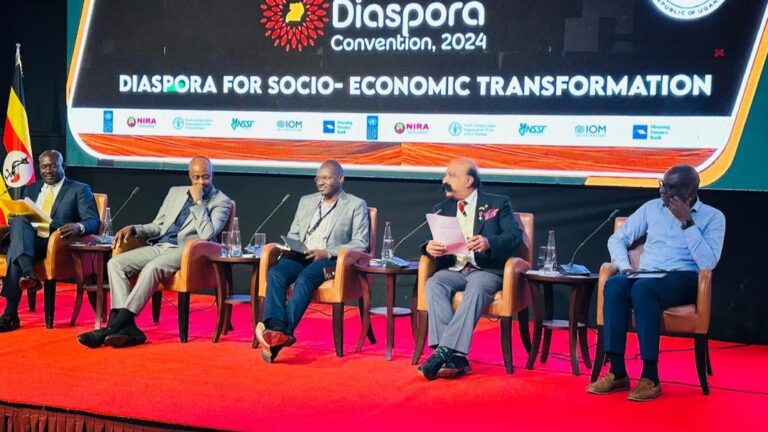
While the Government of Uganda has made several efforts to engage its diaspora through attending and financially sponsoring various diaspora conferences, as well as the establishment of the MoFA’s Diaspora Services Department and the State House’s Diaspora Unit, these initiatives remain fragmented without a National Diaspora Policy, lacking the necessary statutory mandate, sufficient funding, and a clearly defined dictate.
Across the globe, millions of Ugandans have established themselves as leaders in academia, business, and government, making them Uganda’s cultural Ambassadors. Through their networks, they wield global influence that could drive new investments, innovation, and public diplomacy. Many are eager to contribute through knowledge transfer, capacity building, and mentorship, and advances in communication technologies have enhanced the diaspora’s capacity to mobilize and stay connected with Uganda.
Multicultural policies in host countries have also revitalized ethnic pride and homeland engagement, positioning the Ugandan diaspora as a key player in shaping its homeland’s future. The African Union recognizes the diaspora as its “sixth region” and as a key development actor through the “Declaration on the African Diaspora” adopted May 25th, 2003, and the “Sandton Declaration” adopted at the 2012 Global African Diaspora Summit held in South Africa, that called for the diaspora’s integration into national development plans and national democratic processes.
Uganda stands at a crossroads, and the diaspora stands ready to contribute.
With millions of Ugandan citizens living abroad and contributing significantly to the national economy, now is the time for the Cabinet to enact a National Diaspora Policy that creates a dedicated diaspora agency and line ministry to formalize the relationship between Uganda and its diaspora and ensure that their contributions are not only recognized but also maximized.