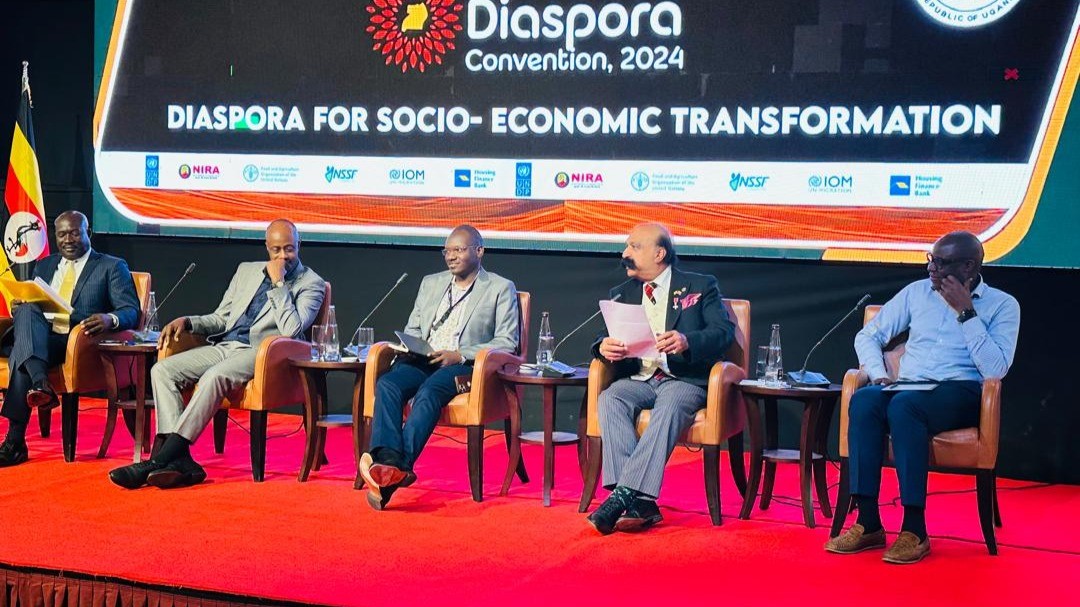

The inaugural Ministry of Foreign Affairs Diaspora Convention, under the theme, “Mobilizing Uganda’s Diaspora for Socio-Economic Transformation,” was a defining moment – a recognition that Uganda’s diaspora is not just a financial contributor but a vital partner in shaping the nation’s future. Held December 18–19 at Speke Resort & Conference Centre Munyonyo, this groundbreaking event signaled the dawn of structured, sustained engagement with Ugandans abroad.
Its success was the culmination of years of advocacy and effort, underscored by the swift dissemination of a feedback questionnaire within hours of its conclusion. Ambassador JOHNNY Muhindo, the Head of the Diaspora Services Department, and his team deserve commendation for their meticulous planning, which we, as members of the diaspora, pledge to support.
In 2023, diaspora remittances exceeded $1.4 billion, accounting for 3% of Uganda’s GDP and surpassing key sectors like tourism. As I have highlighted in Harnessing the Power of the Diaspora for Uganda’s National Development Plan, this is only the tip of the iceberg. With approximately 2 million Ugandans living abroad—a population equivalent to Kampala – the diaspora represents an untapped reservoir of intellectual, entrepreneurial, and cultural resources. These resources can transform Uganda’s economy through innovations in agriculture, technology, and tourism.
The convention reinforced my belief that Uganda’s future lies in fully integrating its diaspora as a strategic partner.
President Museveni, in remarks delivered by H.E. Vice President Alupo, underscored the importance of diaspora contributions in capital, entrepreneurship, and knowledge. Mr. Ramathan Ggoobi, Permanent Secretary of the Ministry of Finance, underscored the indispensable role of the diaspora in advancing Uganda’s socio-economic agenda. Mr. Vincent Waiswa Bagiire, Permanent Secretary of the Ministry of Foreign Affairs, committed to institutionalizing this convention as an annual event, providing a consistent platform for dialogue and action. These perspectives align with my ongoing and long-standing advocacy for a National Diaspora Policy to streamline engagement and maximize contributions.
“If members of the diaspora bring capital, entrepreneurship, and knowledge, they will have made a significant contribution to Uganda’s development,” President Museveni remarked. This statement encapsulates the promise of the diaspora – a promise that must be fulfilled now.
However, realizing this promise requires action. The Ministry of Foreign Affairs’ pledge to draft a National Diaspora Policy is an essential first step but must be expedited. Addressing barriers, such as the lack of voting rights, dual citizenship for children under 18, and streamlined investment procedures, is no longer optional. Embedding these reforms into Uganda’s Vision 2040 will demonstrate a true commitment to harnessing diaspora power.
To ensure sustained impact, it is imperative that all stakeholders – diaspora leaders, policymakers, and development partners – must unite in drafting and implementing the National Diaspora Policy and embedding diaspora engagement in Uganda’s Vision 2040. Developing a policy on diaspora engagement is point number four of objective one, which is to “Enhance effective mobilization of families, communities and citizens for national development,” under interventions envisioned by the third National Development Plan, 2020-2025.
Mr. Bagiire and Mr. Odrek Rwabwogo, the Chairman of PACEID Uganda emphasized the need to view ourselves as Ugandans first, transcending ethnic-based groupings that could dilute collective impact. As I noted in my article, Genealogy: From Oral Tales to Written Legacy, cultural preservation must unite us as Ugandans. Our shared identity is a strength, not a division. While diaspora parents teach their children native languages, we must complement this with programs to preserve culture at home. Let us make cultural preservation a pillar of national pride and a bridge for diaspora engagement.
The convention also showcased inspiring success stories from diaspora members who have invested in Uganda. These stories are proof that the diaspora’s moment is now. By institutionalizing the convention and adopting a National Diaspora Policy, Uganda can create a sustainable framework to harness this momentum, fostering unity and shared prosperity.
While the inaugural convention attracted over 300 participants, predominantly from the U.K. and U.S., extending the event to a full three days in future editions would allow for more comprehensive discussions and engagement. We could dedicate the first day to hearing from the diaspora, the second day from the Government, and on the third we could harmonize the two positions and issue a joint communique and action plan.
With less than a month’s notice, the turnout was remarkable; imagine the possibilities with a year’s preparation. I am gratified to witness this engagement after advocating for such initiatives for well over a decade. It reflects a broader trend across Africa, where diasporas are shaping the continent’s future. In 2023, diaspora remittances across Africa exceeded $90 billion, surpassing Official Development Assistance (ODA) and Foreign Direct Investment (FDI) combined. Unlike volatile cash crops or speculative investments, remittances offer a stable and reliable source of capital, sustaining economies even amidst global turbulence.
I was honored and privileged to address the convention on its opening day. Drawing on themes from my recent articles, including From Fear to Opportunity: Rethinking Uganda’s Dual Citizenship Laws and emphasized the critical need for inclusive policies. These include diaspora voting rights, streamlined processes for dual citizenship for children under the age of 18, and preserving Uganda’s rich cultural heritage. Such measures are essential for unlocking the diaspora’s full potential and fostering deeper engagement.
The inaugural convention has laid a strong foundation. Now is the time for the diaspora’s potential to be realized through bold policies, inclusive engagement, and a commitment to shared growth. Together, we can transform remittances into resilience, cultural preservation into unity, and aspirations into achievements. The diaspora’s story is no longer one of distance but of impact—bridging borders and building a shared future for Uganda and its people.