
The global diaspora is now larger than ever. As of mid-2024, more than 304 million people lived in a country other than where they were born, representing approximately 3.7 percent of the world’s population. Remittances from diaspora communities have surged over the last two decades, increasing by nearly 650% between 2000 and 2022, and now stand among the largest sources of external income for many developing nations.
Beyond financial support, governments are increasingly shaping policies to engage their diaspora more intentionally. Many now view their citizens abroad as partners in national development, with resources that include not only money but also knowledge, networks, and influence.
“A nation’s people may live beyond its borders, but their knowledge, ideas, and influence can remain part of its future.”
Host countries are creating pathways that allow graduates and professionals to stay, innovate, and build companies, recognizing that global talent drives economic growth. The United Kingdom allows eligible international students to switch from a Student visa to an Innovator Founder visa without leaving the country, subject to the route’s requirements. This sends a signal that talent gained abroad is valued, protected, and viewed as a national asset.
This approach is not unique. China has used talent recruitment programmes such as the Young Thousand Talents programme to attract overseas-trained researchers back to the country. India has built a vast digital and financial ecosystem partly through the involvement of its diaspora, whose leadership in global tech industries opened pathways for investment, outsourcing, and innovation at home.
South Korea transformed itself from an aid recipient to a global economic leader in part by building strong relationships with citizens who studied and worked abroad, inviting them to contribute to national development and shaping policies around technology, governance, and education.
These examples point to a shared understanding across nations. Countries that regard their people abroad as part of their future create policies that keep skills, ideas, innovation, and influence connected to national development. They establish clear channels for collaboration, ensure transparency in how contributions are used, and nurture a sense of belonging that is not limited by physical borders.
This invites an important reflection for Uganda: what if the hope for the country’s next chapter lies not only in the potential within its borders, but also in the Ugandans living and contributing abroad?
There are Ugandan researchers shaping global health policies, engineers building digital infrastructure in emerging markets, and educators influencing classrooms in some of the world’s most advanced learning environments. These individuals remain connected to the country that shaped them, and many are eager to play a role in its progress. If Uganda creates platforms that recognize and welcome their expertise, then the diaspora becomes more than a story of departure. It becomes a story of partnership, shared identity, and collective progress.
The Opportunity Before Uganda
Uganda stands at a defining moment where its global citizens and its national ambitions converge. With one of the youngest populations in the world and a rising number of graduates, entrepreneurs, and specialists seeking opportunities beyond its borders, the country now has a global footprint larger than ever before. As these professionals find their place in international industries, they gain access to knowledge, networks, and practical experience that are often unavailable at home.
Taken together, the Ugandan diaspora forms a community of problem-solvers who have been shaped by diverse systems of health governance, business development, technology, academia, and public policy. This worldwide exposure influences how people think, how they lead, and how they respond to challenges, and it can inform the way Uganda competes, grows, and adapts in an ever-changing global landscape.
However, potential by itself does not transform a nation. Without clear and trusted pathways, even the most committed diaspora contributors struggle to identify where to direct their expertise. In the past, some stepped back not out of disinterest, but because efforts felt unclear or lacked structure and transparency. An invitation to contribute remains incomplete if it does not outline how contributions will be used, who will lead the work, or how success will be defined.
“The diaspora’s willingness to contribute is only the beginning. Progress depends on trusted pathways that turn that willingness into meaningful participation.”
Meaningful engagement requires more than goodwill. It requires coordination, structure, and dialogue, supported by policies that value knowledge and innovation alongside financial support. Countries that lead in diaspora engagement treat it as a national priority. They build institutions dedicated to this work, communicate regularly, track the impact of collaboration, and create opportunities that make participation effective and rewarding.
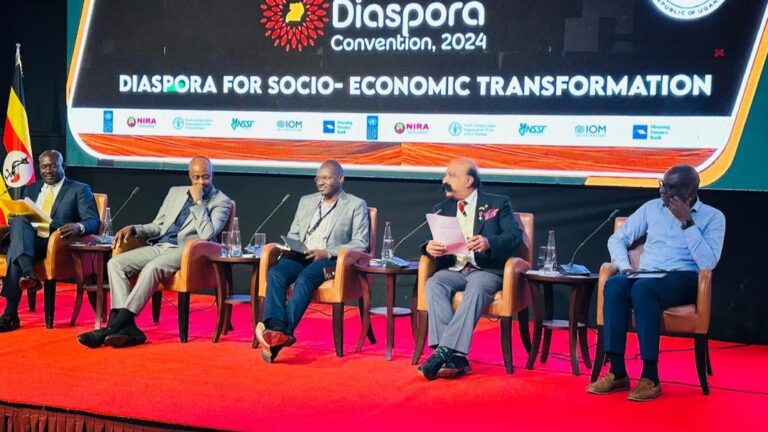
This is the space in which new strategic initiatives such as the Uganda Diaspora Think Tank (UDTT) are emerging as timely and practical responses to the evolving global reality. UDTT recognizes that the country’s global citizens are not simply observers of Uganda’s development, but potential partners in shaping its direction. By creating a platform where ideas, expertise, and lived experiences can be exchanged, tested, and applied, UDTT positions the diaspora as an active voice in national progress. It offers a structured avenue that connects the expertise of Ugandans abroad with the priorities of institutions and communities at home.
Uganda has the opportunity to follow the example of countries that have successfully engaged their diaspora by supporting strategic initiatives such as UDTT and building systems that recognize the expertise of its citizens abroad while creating dependable channels for both returnees and remote contributors to collaborate with institutions at home.
If this moment is approached with clarity and strategy, Uganda can shift from simply appreciating its diaspora to collaborating with them. The result is not only stronger programs and policies but a stronger national identity that includes its citizens wherever they live. Uganda’s development journey will be shaped by those rooted at home, those living afar, and those moving between worlds.
The question is not whether the diaspora wants to contribute. The question is whether Uganda is prepared to create the environment that allows contribution to matter. If Uganda makes room for its global community to participate, the story of migration will no longer be one of departure, but one of connection, return, and shared progress.